From Concept to Prototype
Our family took a lot of road trips when we were growing up, and one of our favorite ways to entertain ourselves was to ask each other “Would you rather?” questions — especially absurdist ones that immediately made us laugh. Eventually, we wondered if we could make a game out of it, and the concept for In A World was born.
We knew we had to make a prototype as quickly as possible, because the best way to see if something is fun is to actually play it. The first real design challenge we ran into was scoring. How do you assign points in a game like that? Our initial prototype was a guessing game: players took turns drawing "Would You Rather?" cards and secretly guessing which option they thought a majority of the other players would choose.
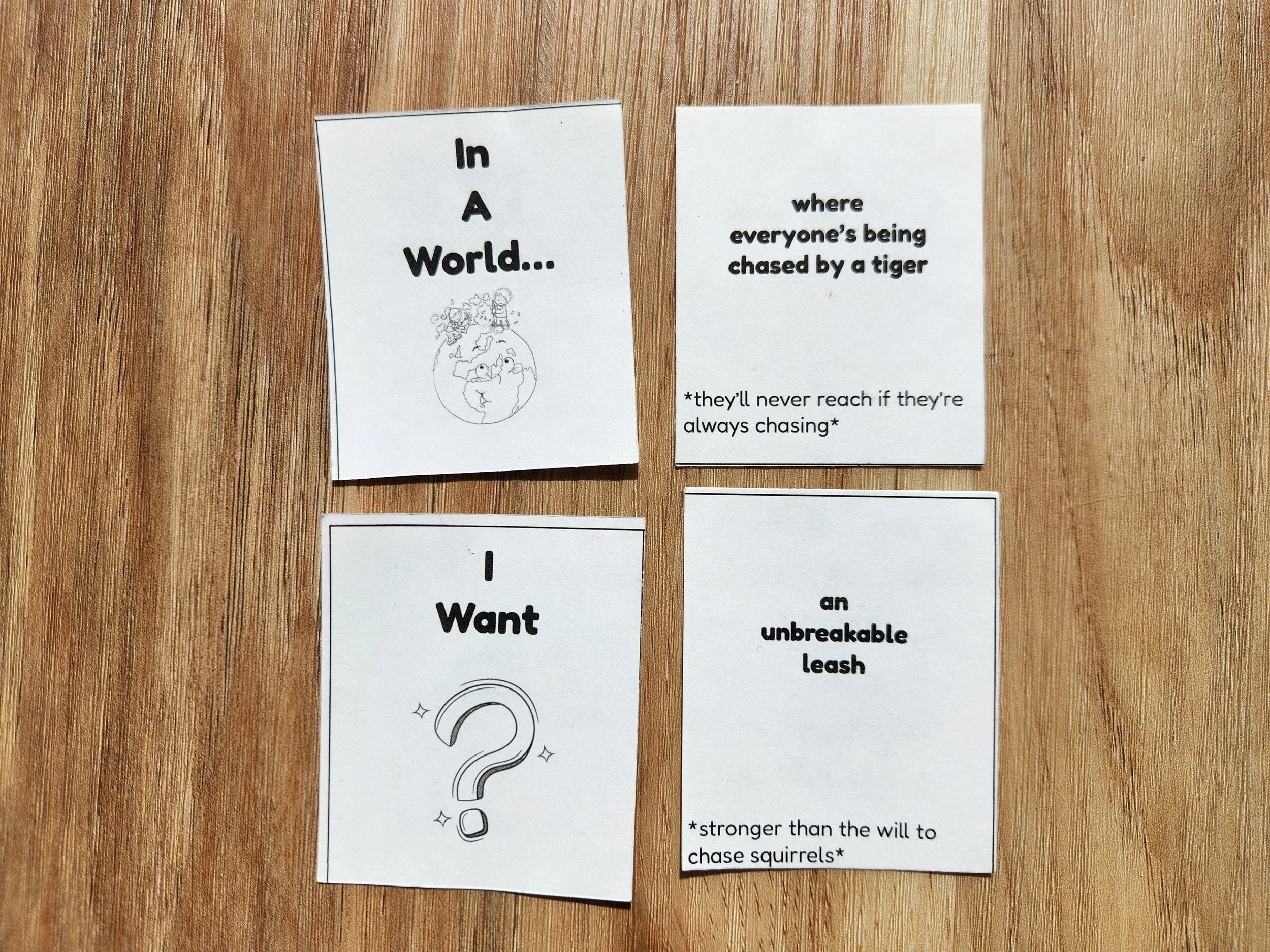
The original prototype of “In A World.”
“We knew we had to make a prototype as quickly as possible, because the best way to see if something is fun is to actually play it!”
We discovered that our design wasn’t fun at all. It was too slow and easy for players to disengage: Everyone else had to wait while the player who drew the card secretly wrote down their choice, and then that player had to wait while the rest discussed the options and voted. We scrapped that scoring system and discussed what we wanted to do for the next iteration. We did notice something valuable from this first version that we wanted to keep: discussions got a lot more fun when people were debating a shared situation rather than just stating personal preferences.
We also learned our game wasn’t very replayable. "Would You Rather?" dilemmas, even really good ones, are only fun once or twice. We needed a way to keep situations feeling fresh. That's when we started experimenting with what we called "overlays" — modifiers you could layer onto existing dilemmas to change the context entirely. Suddenly, "would you rather x or y?" became "would you rather x or y… in a world where z is also true?" Adding that extra dimension made even familiar scenarios feel completely new, and the conversations became more engaging.

At this point we made another version to playtest. Even though the overlays definitely felt like a step in the right direction, we still felt like the game wasn’t entertaining enough. What if, instead of choosing between two pre-written options, players got to respond to the world they found themselves in? That shift in perspective took us from a passive choosing game to an active, imaginative one. We created the "In A World… We Want…" structure: the cards introduce a challenge, and the players work together to overcome it. The game stopped being about picking answers and started being about storytelling and creative problem-solving.
We made a third version and played once more, printing out cards on our home computer and cutting them out by hand. It wasn’t pretty, but it was playable, and allowed us to make changes to cards as we played, cross out cards that didn’t work, and fine-tune the ones that showed promise.
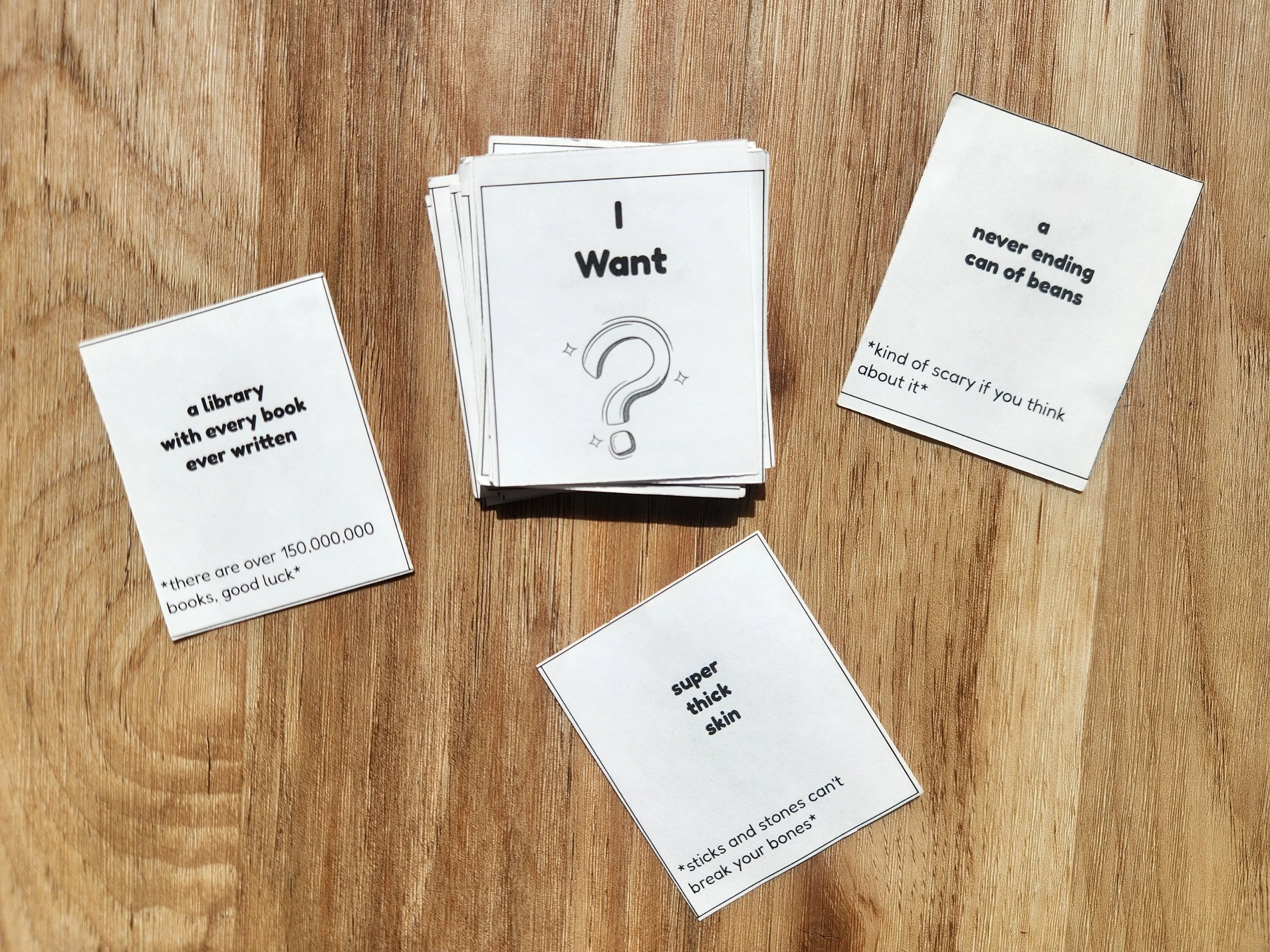
The first iteration of the Want cards, back when we were still using “I want” instead of “We want.”
“If you're working on a game of your own, here's the best advice we can offer: build something you can play as soon as possible, even if it's embarrassingly rough. You will learn things during that first playtest that no amount of planning can teach you.”
If you're working on a game of your own, here's the best advice we can offer: build something you can play as soon as possible, even if it's embarrassingly rough. You will learn things during that first playtest that no amount of planning can teach you. And don't be precious about your original idea — we went through several versions of this game before it became the one you can play today. The best thing you can do is follow the fun wherever it leads, even if that means leaving your first idea behind!